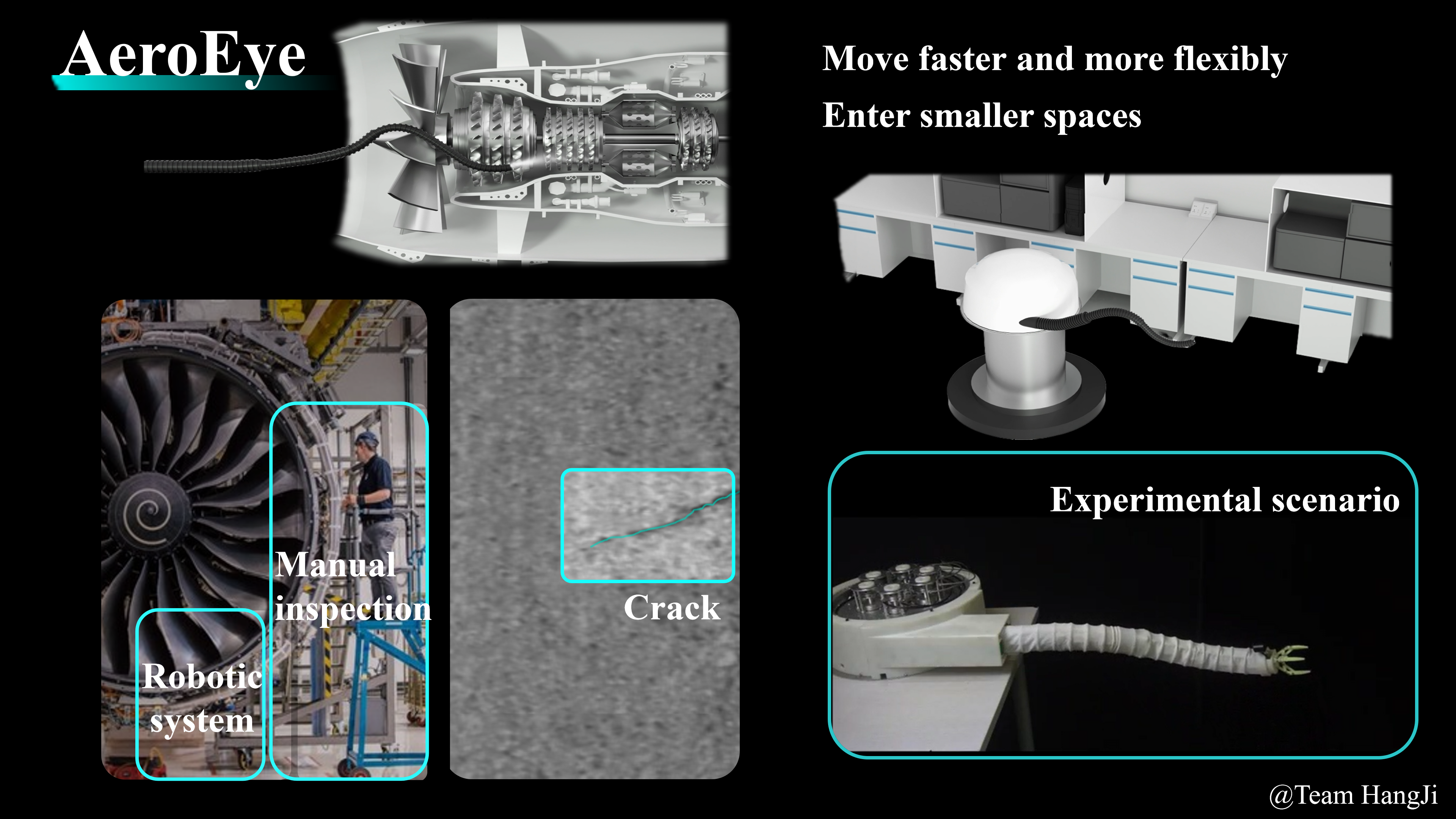
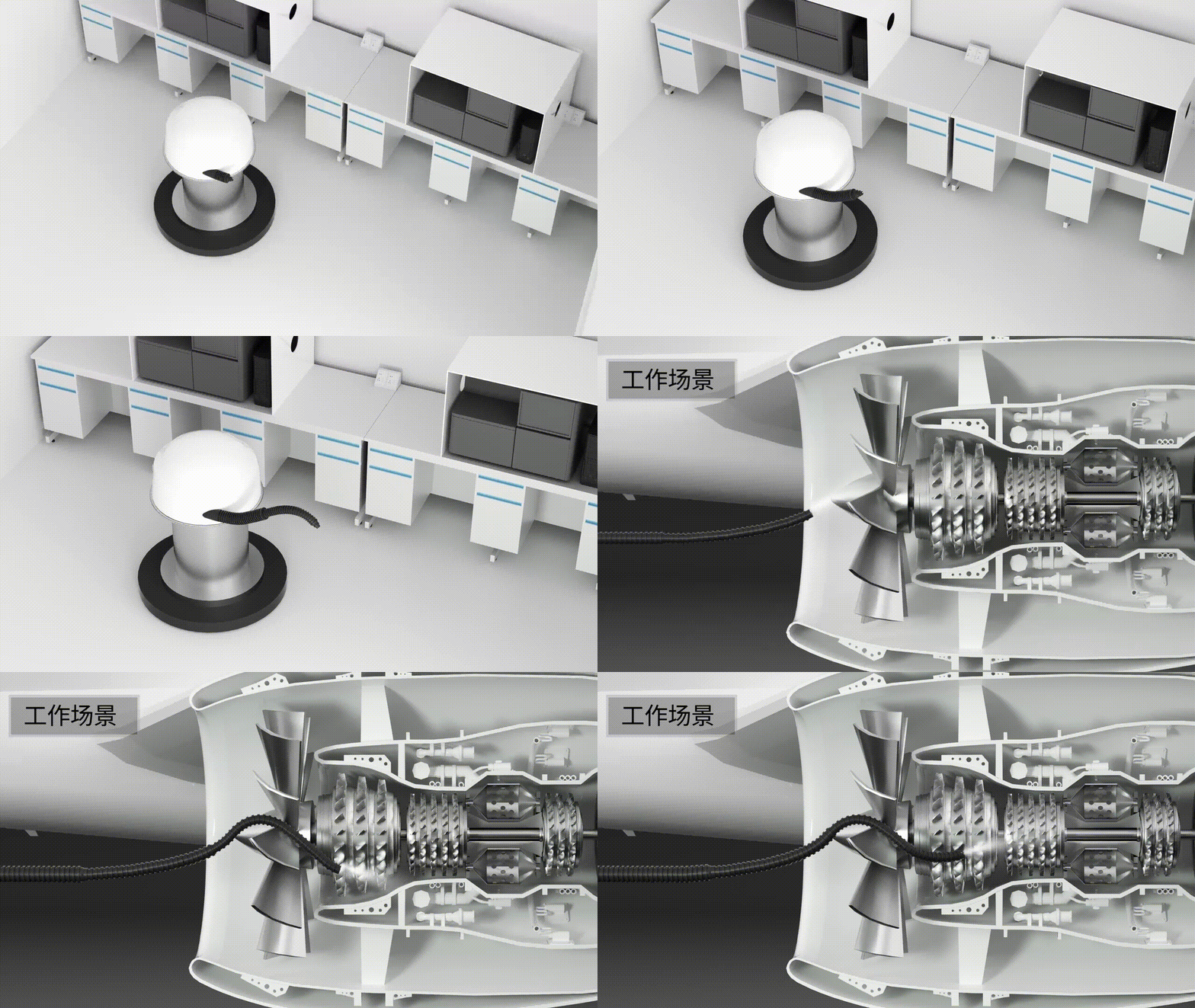
AeroEye is a snake-like robot system designed to inspect aircraft engines for damage. Its flexible structure enables access to confined spaces, combining robotic mobility with visual defect detection.
I joined Tongji University’s QiDi program and served as a key team member under the guidance of Prof. Peng Qi. Supported by the China National University Student Innovation & Entrepreneurship Development Program, I was primarily responsible for robotic perception and contributed to system development.
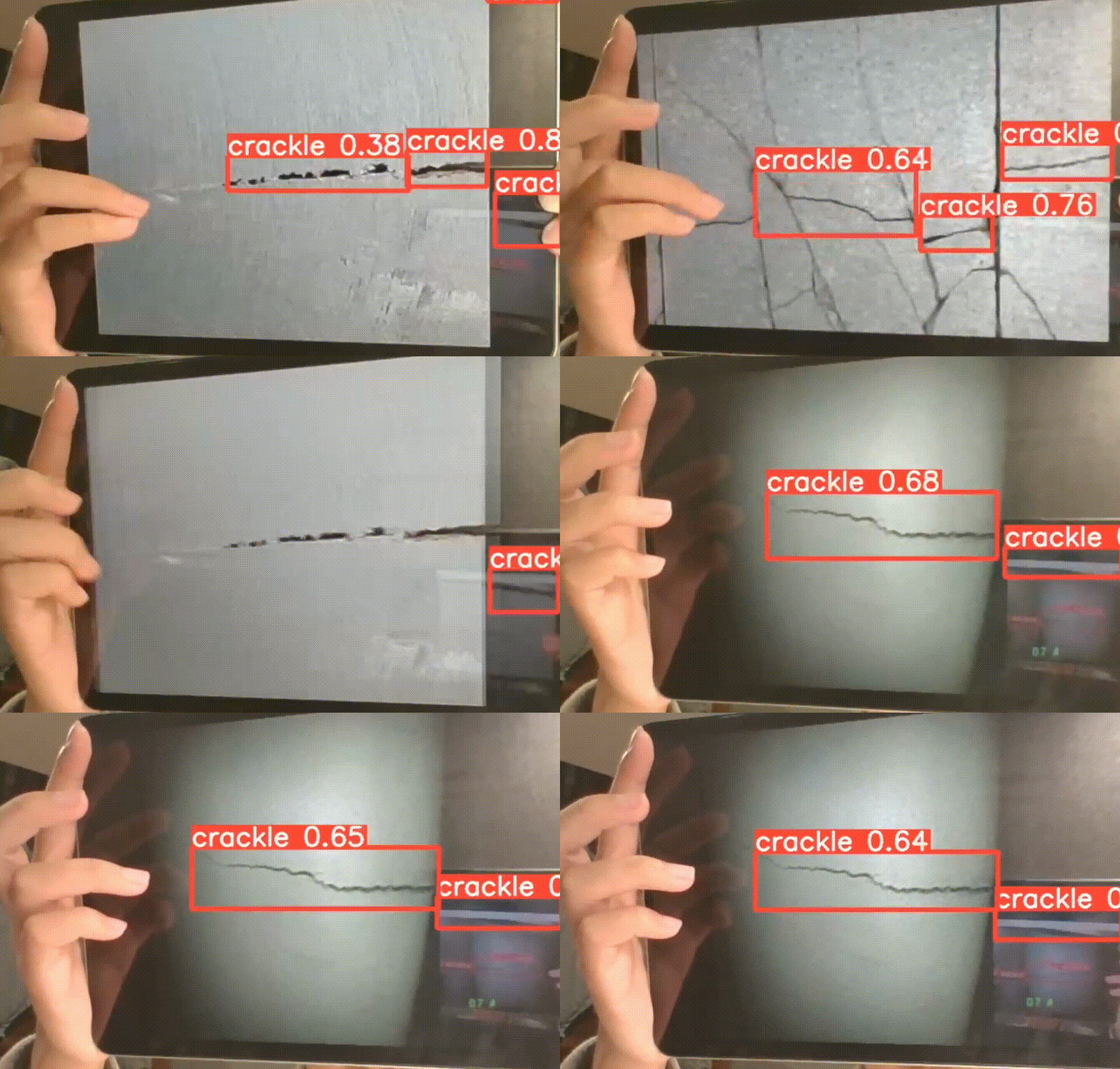
System overviewVisual damage detection
Patents
I am the first student inventor on two invention patent applications, with my advisor listed as the first inventor: a YOLOv5-based method for aircraft engine crack detection, and an obstacle avoidance method and system for an aircraft engine defect detection robot. Both applications are currently undergoing substantive examination.
🏆 Awards & media
Grand Prize, Huawei ICT Competition 2023–2024 Global Final
Gold Award, Shanghai, China International College Students’ Innovation Competition 2024
First Prize, East China Division, HUAWEI CUP National Undergraduate IoT Design Contest 2023
First Prize, 9th Tongji University College Student Innovation and Entrepreneurship Academic Forum
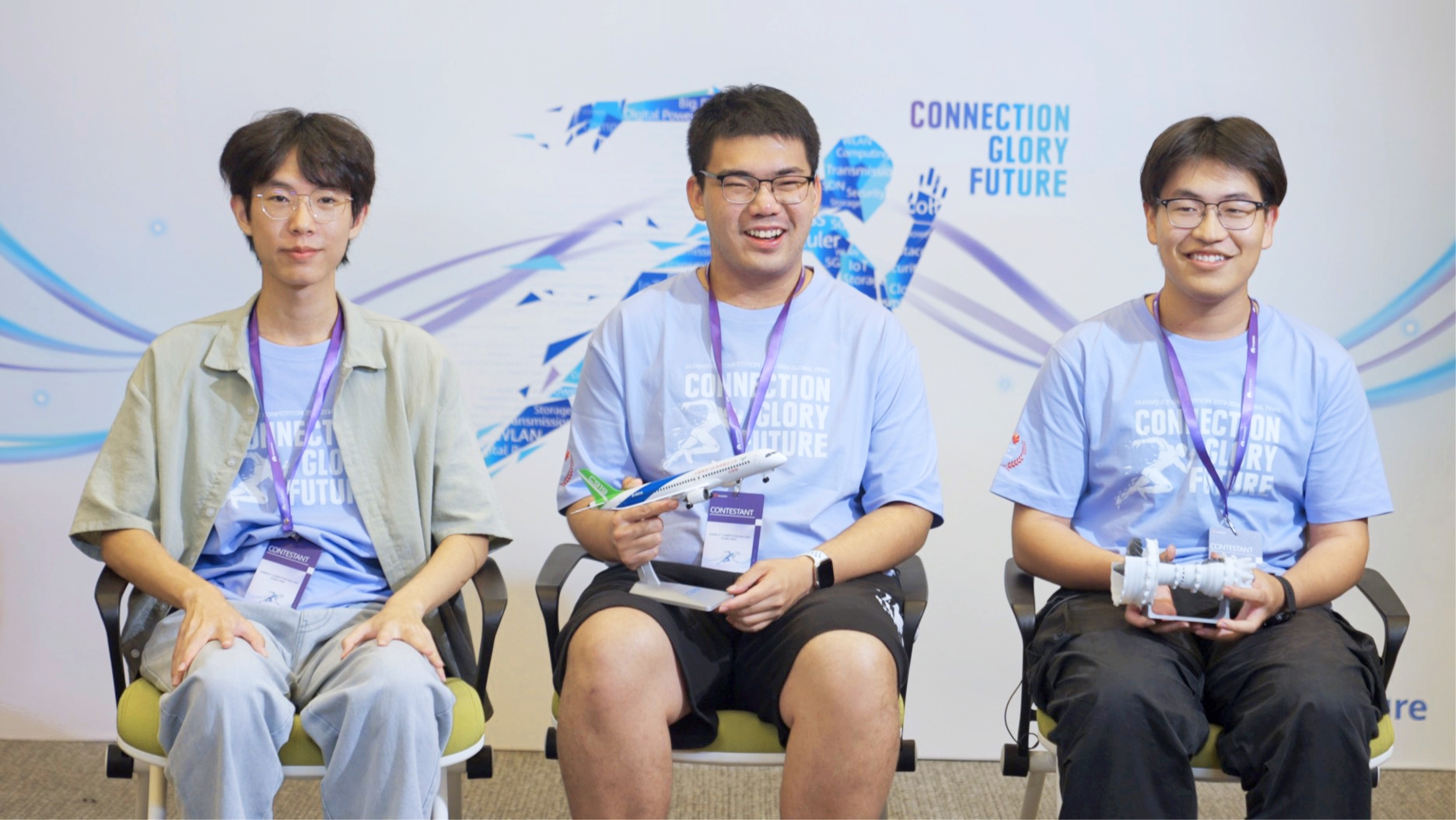
Our team also participated in the interview and filming of CGTN’s documentary series China: Race to the Future!
AeroEye team interview
Gesture Recognition with Infrared Sensors
#circuit design#pcb layout#K-Means clustering#embedded systems
Project details
Course Project of EIE2622 Comprehensive Design & Practice A at Tongji University.
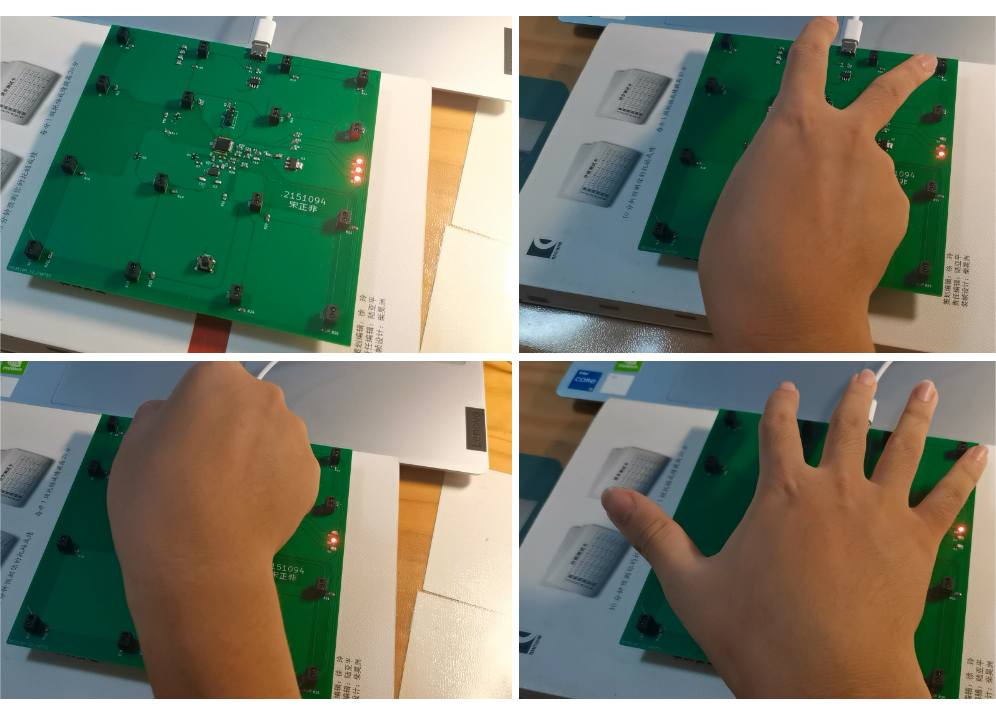
This course design covers circuit schematic design, PCB layout, K-Means algorithm clustering, embedded language development, etc., so that the gesture recognizer can sense the rock✊, scissors✌, and paper✋ gestures placed close to the PCB, and display the judgment results in the form of LED lights.
Real-Time Depth Map and 3D Point Cloud Generation with a Stereo Camera System
#stereo camera#depth estimation#point cloud
Project details
Course Project of EIE3453 Image Processing & Machine Vision at Tongji University.
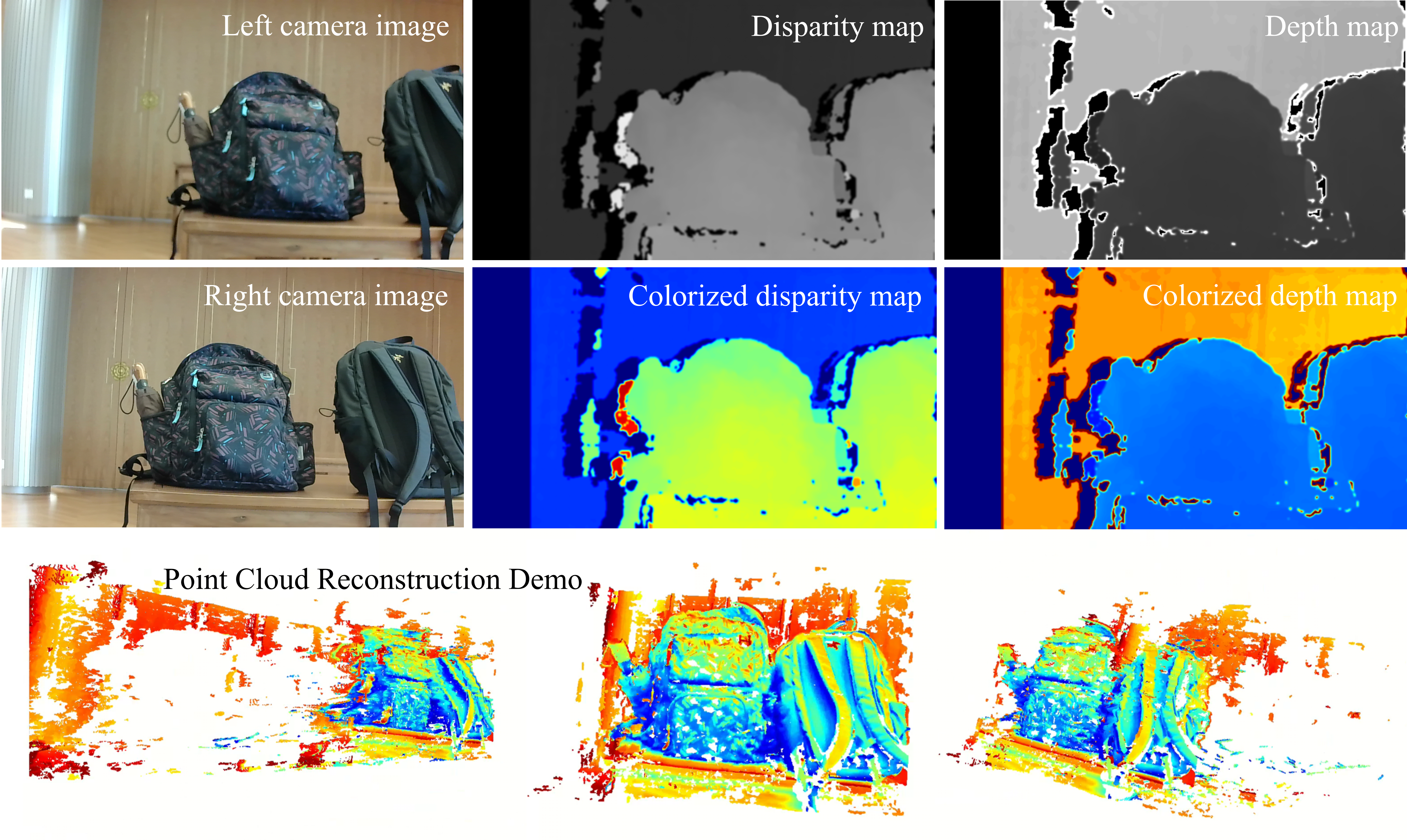
A stereo vision platform built around the HBVCAM-W202011HD V33 stereo camera, covering the complete pipeline from image acquisition and camera calibration to real-time depth estimation and dense 3D point cloud generation.
The project compares Block Matching (BM) and Semi-Global Block Matching (SGBM), with SGBM improving disparity quality through path cost aggregation. Depth maps are back-projected into 3D point clouds for scene reconstruction and object measurement, achieving object length measurement errors below 10% in the experiments. SIFT-based stereo image rectification and matching are also explored to improve matching accuracy.